


Everything Big Starts Small: Reflections on a Year of Building a Staff Learning Collective
As educators, we often talk about creating a culture of learning for our students. We want our classrooms to be places where students are curious, ask questions, explore ideas, and learn collaboratively.
But creating a culture of learning among adults can be surprisingly difficult.
This year, I learned that culture cannot be mandated. It cannot be created through a policy, a meeting, or a well-intentioned initiative. Culture is something that is lived. It grows slowly through relationships, shared experiences, and opportunities for people to come together around a common purpose.
This was one of the most important lessons I learned through our Book Club, which later evolved into what became known as the Staff Learning Collective.
The Beginning
The idea was born from two things I enjoy greatly: reading and learning with others.
I have always believed that books are one of the best ways to learn. At the same time, I have always enjoyed discussing ideas with other people. Some of the most meaningful learning experiences I have had did not come from sitting alone with a book, but from talking about ideas, hearing different perspectives, and reflecting together.
When I looked around our school, I felt that one thing that was missing was a stronger collaborative culture of learning among staff. Teachers are busy. We are often consumed by lesson planning, grading, meetings, emails, and countless other responsibilities. Opportunities to simply sit together, discuss ideas, and learn from one another can be surprisingly rare.
I also felt that much of professional development in schools can sometimes feel overly structured or compliance-driven. While formal professional development certainly has its place, I wanted to create a space where teachers could gather voluntarily, explore interesting ideas, and engage in meaningful conversations.
And so, the Book Club was born.
When Reality Arrives
At the beginning of the year, I was genuinely excited. If I am being honest, I expected more people to join than actually did.

Our first two books were Brave New Words by Salman Khan and A Brief History of Intelligence by Max Bennett. The original format was straightforward: we would read sections of a book each week and then meet to discuss them.
The idea seemed good in theory.
In practice, however, I soon realized that the format created barriers to participation. Teachers who had not joined at the beginning of a book often felt hesitant to jump in halfway through. Others may have been interested but felt they did not have the time to keep up with the reading.
This led me to an important realization: a good idea is not enough. If people cannot easily participate, many simply won't.
The Pivot
As the year progressed, I began to rethink the format.
The first change was a rebrand. The Book Club became the Staff Learning Collective.
The second change was even more significant. Rather than spending several weeks on a single book, we began exploring a different book each week. Instead of expecting participants to read the book beforehand, I would provide a summary of the key ideas and use those ideas as a springboard for discussion.
Most importantly, we made one thing very clear:
You do not need to read the book to participate.
Anyone could join.
Whether someone had read the entire book, skimmed a summary, or knew absolutely nothing about it beforehand, they were welcome.
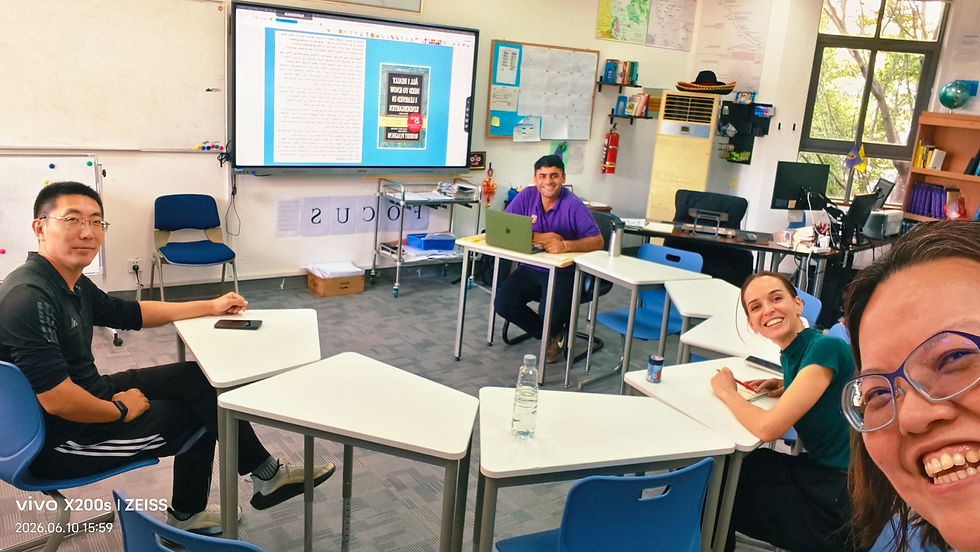
This shift transformed the experience. It opened the door to a wider range of conversations and topics. One week we discussed habits and personal growth (Atomic Habits by James Clear). On other weeks we explored happiness (The Happiness Project by Gretchen Rubin), language (The Rise of English: Global Politics and the Power of Language by Rosemary Salomone), organizational culture (No Rules Rules: Netflix and the Culture of Reinvention by Reed Hastings and Erin Meyer), ancient history (Dinner with King Tut: How Rogue Archaeologists Are Re-Creating the Sights, Sounds, Smells, and Tastes of Lost Civilizations by Sam Kean), or everyday wisdom (All I Really Need to Know I Learned in Kindergarten by Robert Fulghum). Each session brought something new.
More importantly, the focus shifted away from books and toward ideas.
What I Learned About Culture
Looking back, the biggest lesson I learned has little to do with books.
It has to do with culture.
When I first started the initiative, I unconsciously assumed that if something was a good idea, people would naturally want to participate.
I no longer believe that.
Professional learning cannot be forced. Collaboration cannot be mandated. People cannot be compelled to be curious, reflective, or engaged simply because leaders think something is valuable.
For a culture of learning to develop, people need to see value in it for themselves.
They need to want to be there.
They need to feel that their time is being respected and that the experience is meaningful.
Culture grows when people choose to participate, not when they are required to.
That realization has shaped the way I think about professional learning moving forward.
The People Matter Most
One of the most rewarding aspects of the Staff Learning Collective was the people who chose to participate.
Without people, it would simply be a book.
Not a book club.
Without people, it would simply be learning.
Not a staff learning collective.
Some teachers attended almost every session. Others joined occasionally when a particular topic interested them. Attendance numbers were never large, but over time I realized that the numbers matter less than the conversations.
Some of my favorite discussions came when teachers from very different subject areas sat together and explored ideas through their unique perspectives.
One particularly memorable session centered on Dinner with King Tut. The conversation brought together educators from very different disciplines and backgrounds, creating rich discussions that would likely never have happened otherwise. (I'll include a link here to my earlier blog post about this book.)
Another memorable moment came during our discussion of No Rules Rules, when another teacher volunteered to facilitate the conversation. It was a small moment, but an important one. It suggested that the initiative was no longer simply something I was running; it was becoming something others felt ownership over as well.
Everything Big Starts Small
At the end of the year, I am not going to claim that we created a culture of professional and collaborative learning.
That would be far too simplistic.
Culture takes years to develop. It evolves slowly and organically through countless interactions and experiences.
What I will say is this: We took some small steps in the right direction.
And perhaps that is enough.
One thing that surprised me this year was realizing that everything big starts small. Every strong culture, every meaningful tradition, every successful initiative begins with a handful of people willing to show up consistently and invest in something they believe matters.
The Staff Learning Collective may have started as a simple book club. Over time, it became something more meaningful: a space where educators could come together, share ideas, challenge assumptions, learn from one another, and engage in conversations that often extended far beyond the books themselves.
As we look ahead to next year, I remain convinced that professional learning is at its best when it is driven by curiosity, relationships, and genuine engagement rather than compliance.
Building a collaborative culture of learning is difficult work.
But it is worthwhile work.
And like all worthwhile things, it starts small.


Comments